In 1886, Carl Benz, one of the founders of Mercedes-Benz, invented the automobile.
In the 135-year history of automobiles, all kinds of wonderful and interesting things have happened.
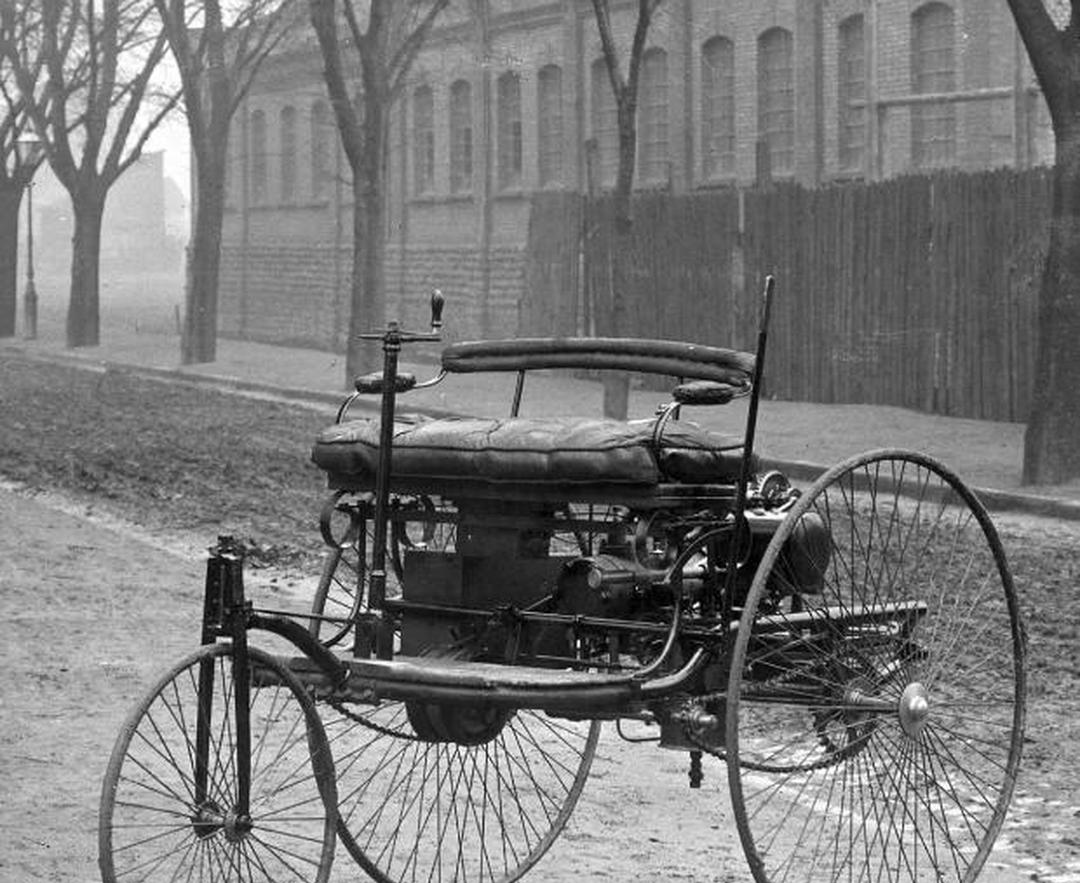

Let’s take stock of 10 cold knowledge in the history of automobiles. Come and see how many you know!
1. Oil is thicker than blood
We all say that blood is thicker than water, but we don’t know that “oil is thicker than blood”. A lot of people know even more about cars than they do about their own bodies! According to the survey, 90% of men know the fuel consumption of their cars, but only 58% of men know their blood type; Even fewer know their cholesterol levels, only 43%!
2. Legal drag racing
Germany is the only country in the world that has no speed limit at high speeds. In the unlimited speed section of Germany, you won’t receive a ticket even if you overtake a police car at 300 km/h. Of course, the premise is that your car can go that fast and you have to overtake from the left lane.
3. Two-wheeled police car
I believe you have seen many classic scenes of police car chases. Most of the ones used to hunt down bad guys are well-equipped police cars, and helicopters are sometimes even dispatched in the United States. But more than a hundred years ago, the new york police used bicycles to hunt down bad guys, and it lasted until 1898. Yes, you read that correctly, cars were so slow back then.
4. Historic parking tickets
I’ve had a driver’s license for five years, and I’ve driven quite a bit. So far, I’ve only got a parking ticket. Parking tickets are the pain of every old driver. You know, many times it’s not that we want to park illegally, but that we simply can’t find a place to park in the city. Interestingly, parking tickets did not appear in modern times. As early as 1902, 16 years after Mercedes-Benz invented the car, a “lucky man” received the first illegal parking ticket in human history.
5. The “car” on the moon
Cars are not unique to the earth, they are also found on the moon. So far, as part of NASA missions, humans have traveled on the moon with three “cars”. These lunar rovers are designed to increase the mobility of astronauts and transport materials. Good news: Because the cost of interstellar transportation is too high, it is impossible for these three vehicles to be brought back to Earth. So, theoretically, as long as you are given a pair of telescopes and their coordinates, you can see them from Earth!
6. “Deadly” red light
Not only is running a red light fatal, but waiting for a red light is also “fatal”. According to the survey, people spend about two weeks waiting for a red light in their life. For those old drivers who often drive, the waiting time for a red light is “a little bit longer” than the average person-two years and six months.
7. Super traffic jam (1)
In history, the longest traffic jam occurred in 1980. Between Lyon and Paris, France, the queue stretched for 176 kilometers. The reason for the traffic jam was the peak return journey after the holiday and the bad weather at that time. Because of my work relationship, I often walk the road between Lyon and Paris. Despite the huge traffic volume, I haven’t encountered a particularly serious traffic jam. I can’t imagine the 176-kilometer traffic jam 40 years ago.
8. Super traffic jam (2)
The longest traffic jam in human history occurred in France, while the longest traffic jam occurred in China. In 2010, on the road from Beijing to Tibet, trucks carrying road construction materials also caused more than 100 kilometers of traffic jams, which lasted for 12 days.
9. Cutting cables that are still messy
Hyundai cars are highly electrified, and if you remove all the cables from Hyundai cars and put them together, you will get a cable harness that is 1-3 km long.
10. Strict German “chaotic” traffic regulations
The Germans are known for their rigor, and it was the Germans who invented the car. However, in 1902, there were about 30 sets of traffic laws in Germany, when only more than 4,700 people in Germany had driver’s licenses-this shows how chaotic the traffic regulations in Germany were at that time. After understanding this history of Germany, we can understand why there are still some strange traffic regulations in some parts of Germany to this day. For example, when car owners in Hesse encounter a running horse on the road, they are not allowed to overtake, and the horse’s running speed is about 15 km/h. You can imagine how aggrieving it is to follow a horse and not be able to overtake.